The Organization for Security and Co-operation in Europe (OSCE) is the world’s largest regional security organization, bringing together 57 participating States across Europe, Asia and North America. Its structure includes a Secretariat, specialized institutions and field operations with clearly defined mandates.
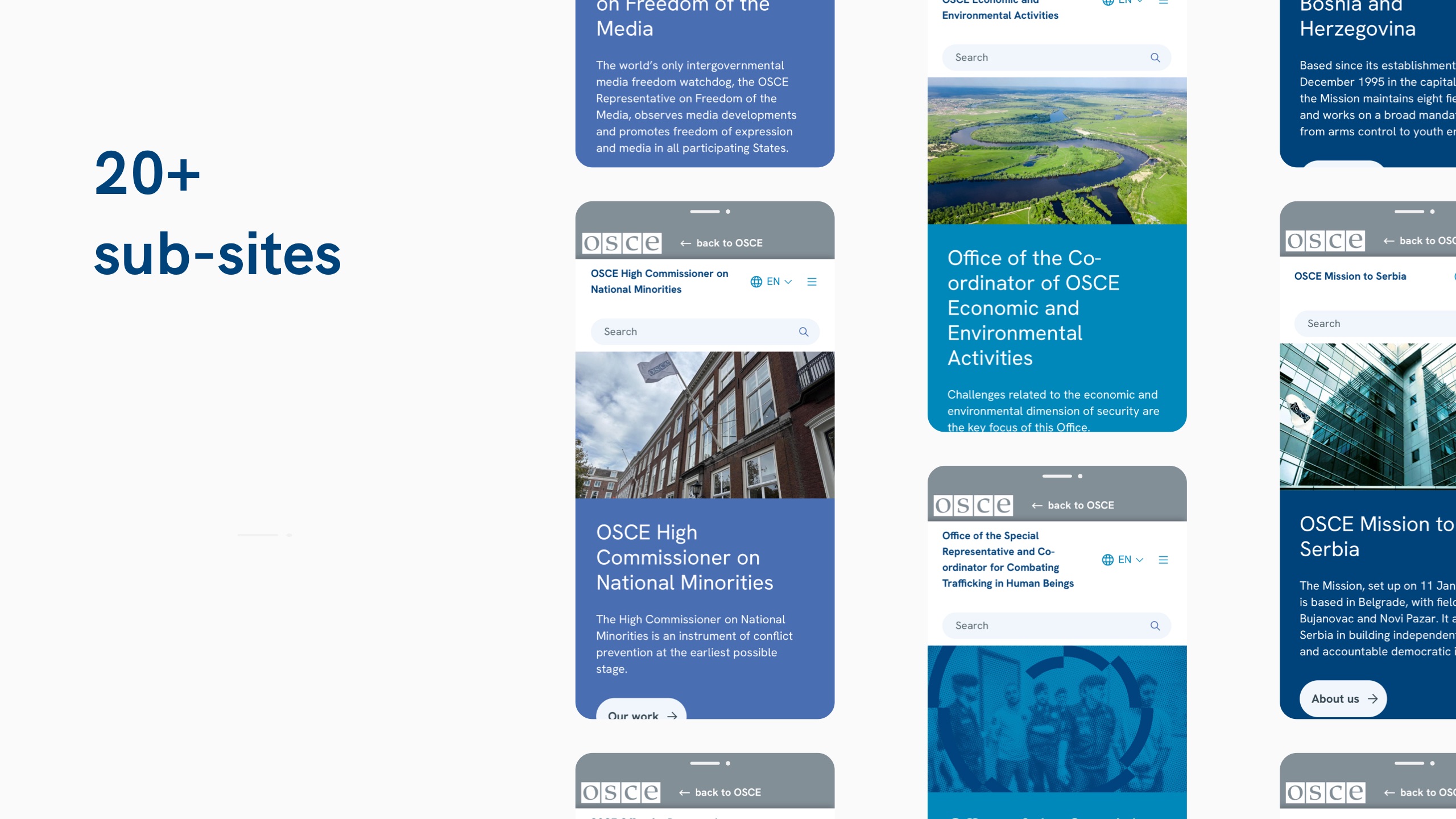
The website mirrors the way the OSCE operates: decentralized, multilingual and collaborative. Rather than relying on a single, centrally managed platform, it now comprises 20 interconnected sub-sites. This approach enables headquarters units, institutions and field operations to communicate directly with their respective audiences, while remaining part of a unified system with a shared visual identity and governance framework.
Explaining this complex structure clearly in more than 50 languages and in politically sensitive contexts was the main challenge of the redesign.
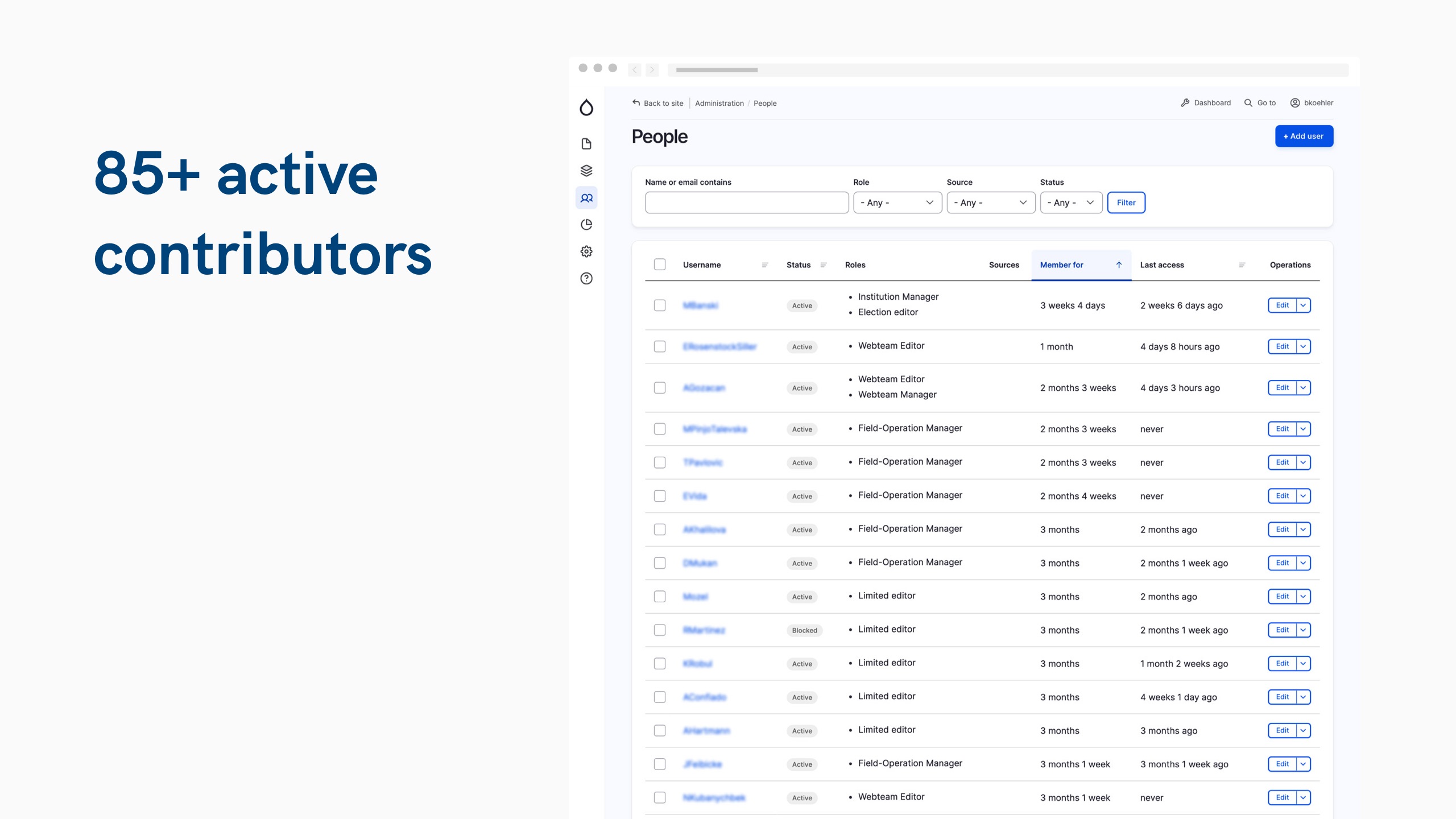
The former Drupal 6 website was rebuilt as a modern Drupal 11 platform, keeping a single shared codebase while enabling distributed ownership. More than 150,000 pages and 50,000 digital assets were migrated without interrupting editorial work. Today, over 80 editors publish content through clearly defined roles and approval workflows directly integrated into the CMS.
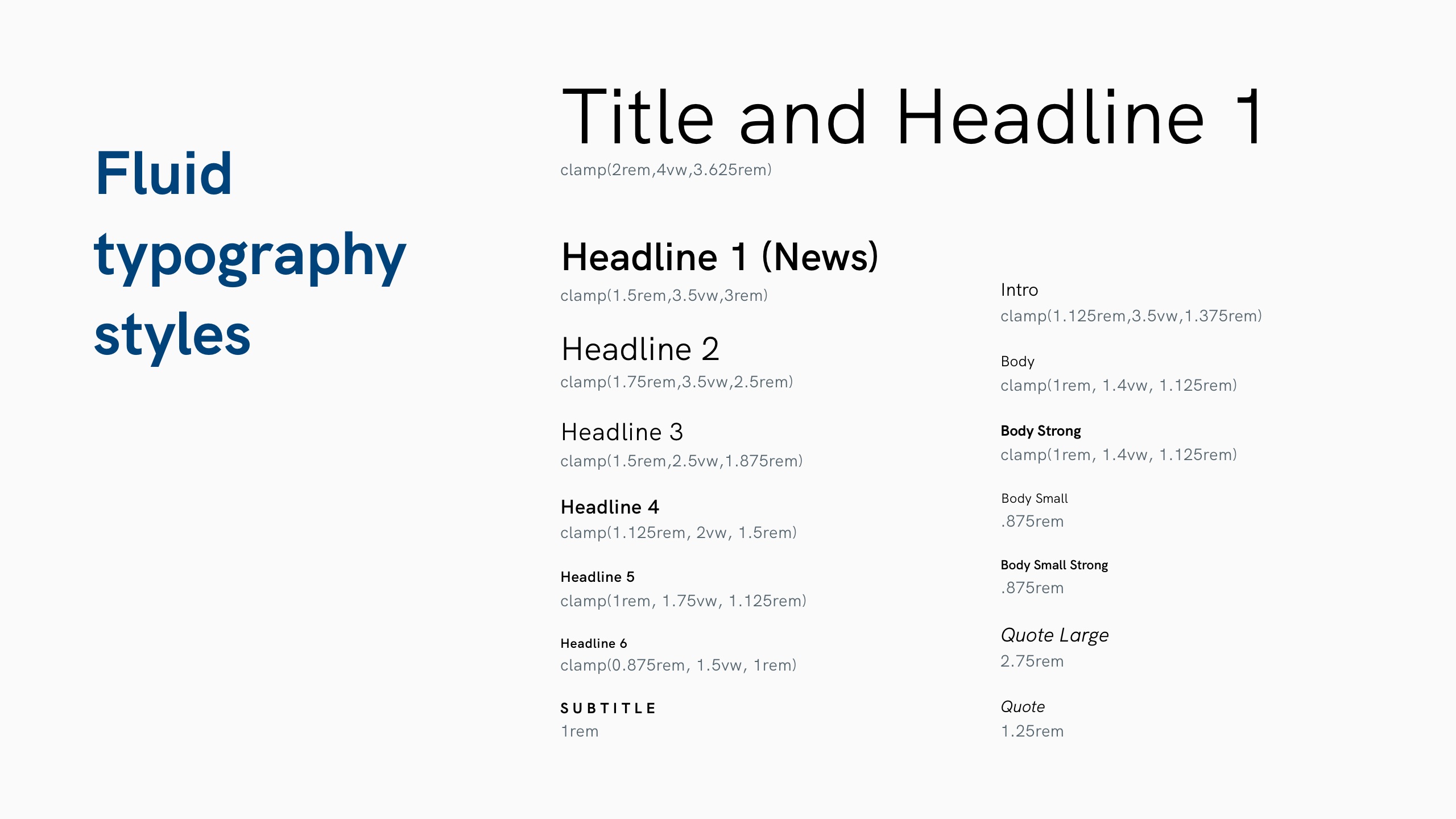
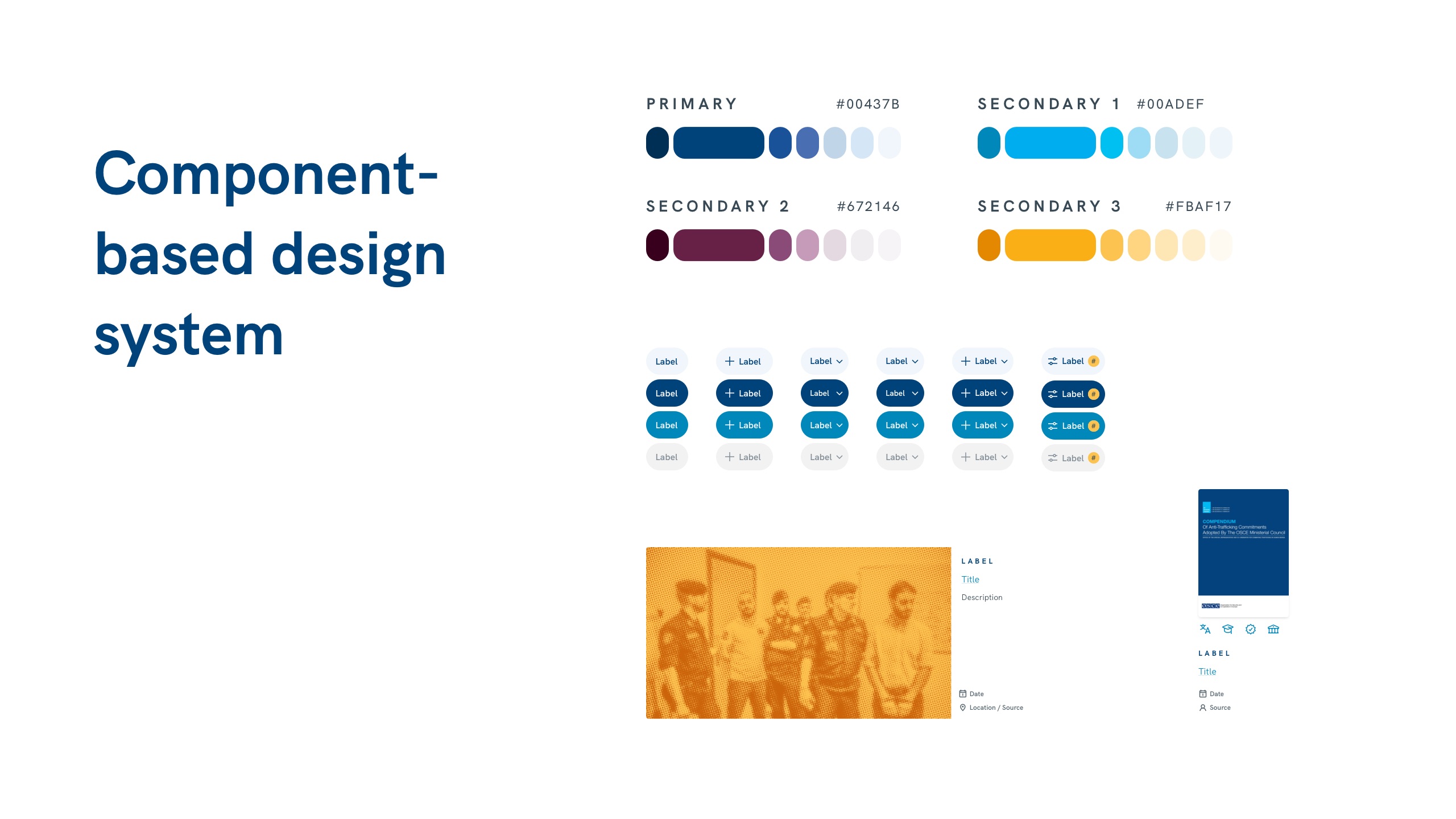
The information architecture was redesigned from a user perspective: clearer language, better navigation and a significantly faster search powered by Typesense. A modular design system allows editors to build flexible, visually engaging pages while ensuring consistency and accessibility (WCAG 2.2 AA). AI-supported translations are integrated directly into the CMS, enabling efficient multilingual publishing with full editorial control.
The result is a governance-aligned digital foundation that reflects how the OSCE works in practice.
Get the full user experience on https://www.osce.org
Clearly explaining the OSCE’s complex structure in politically sensitive contexts was the main challenge of the redesign.
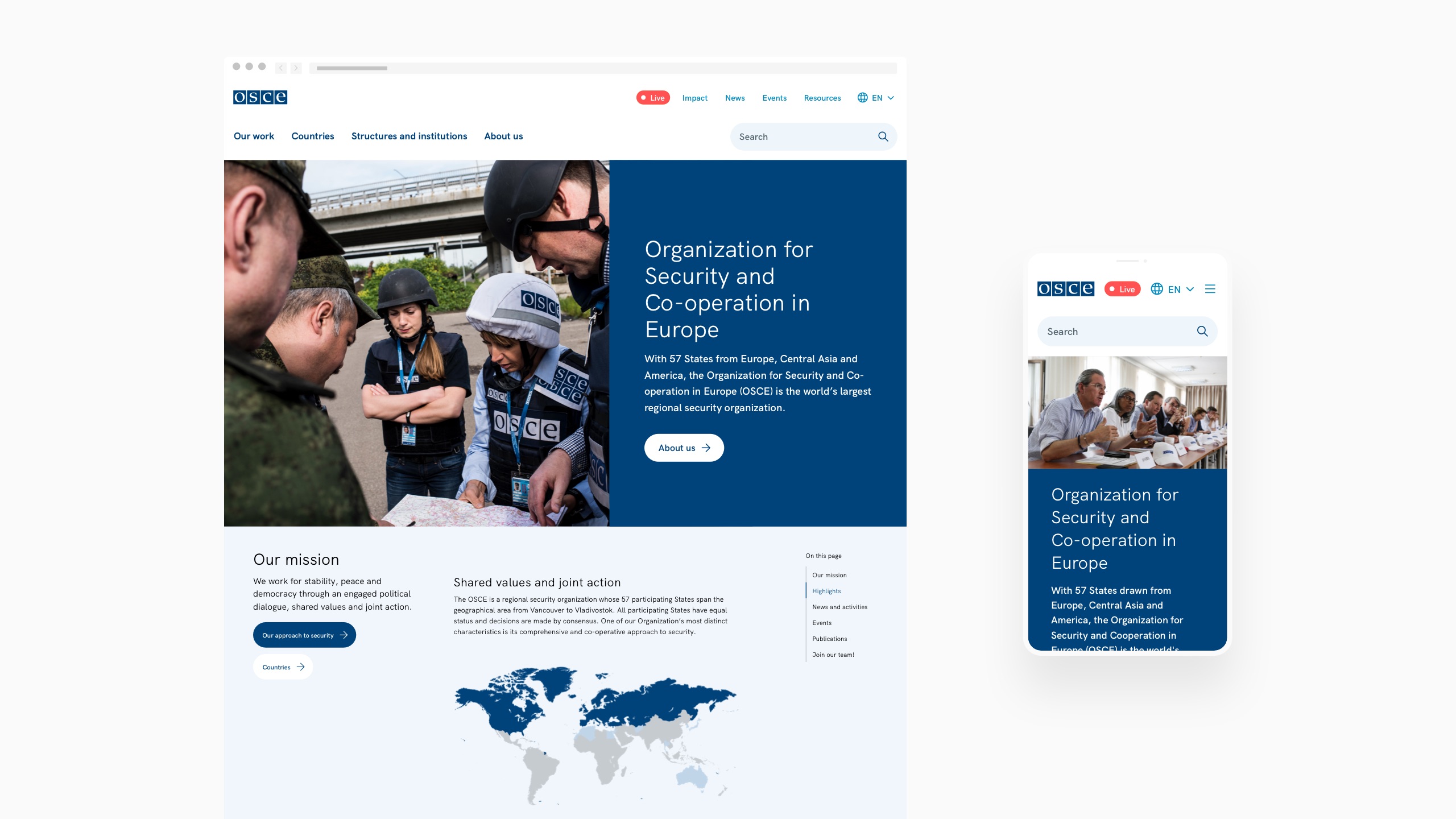
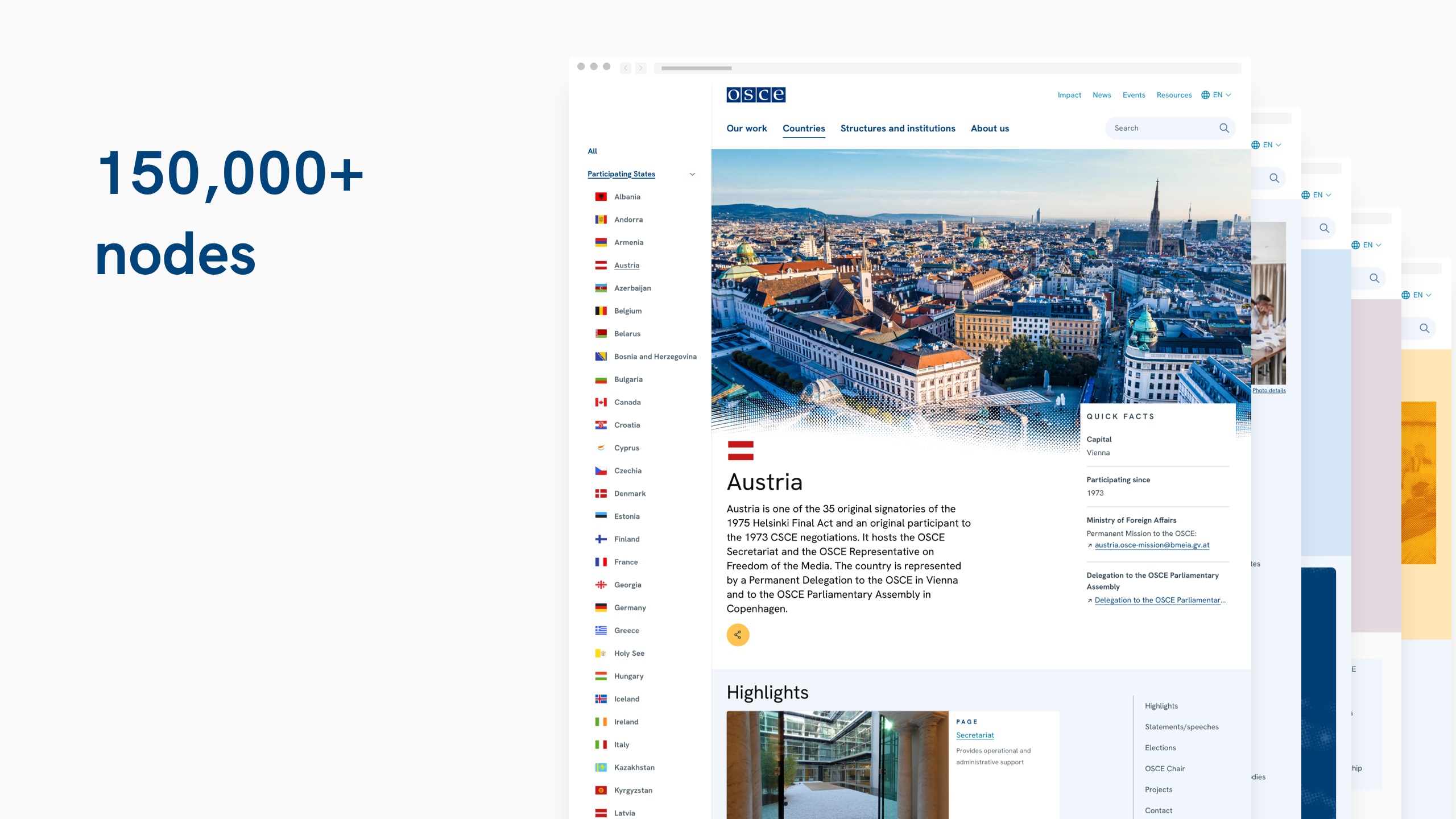
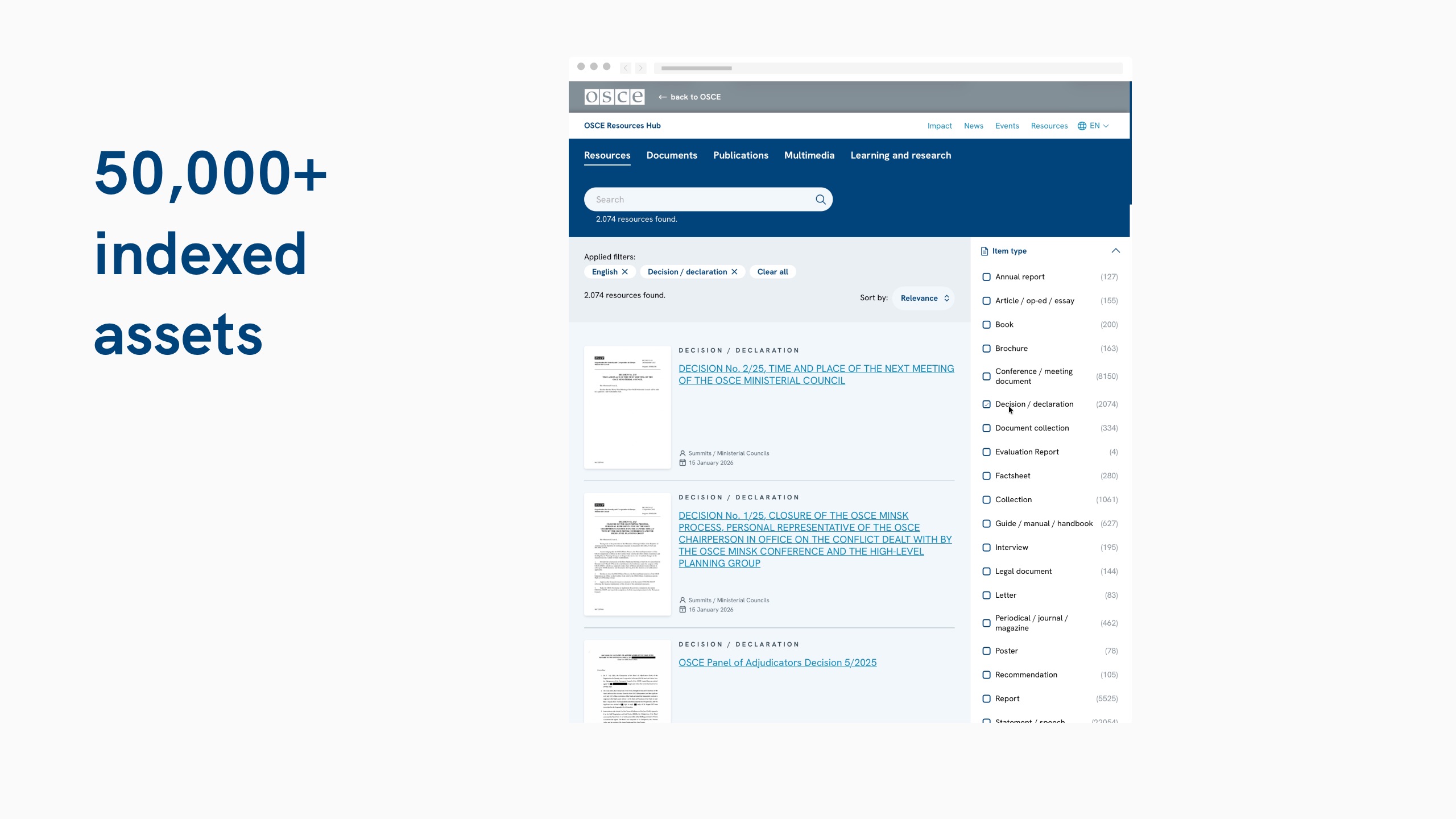
OSCE institutions, headquarters and field operations can now communicate directly with their audiences without losing the common identity.
Editorial rights are supported through roles and publishing workflows.
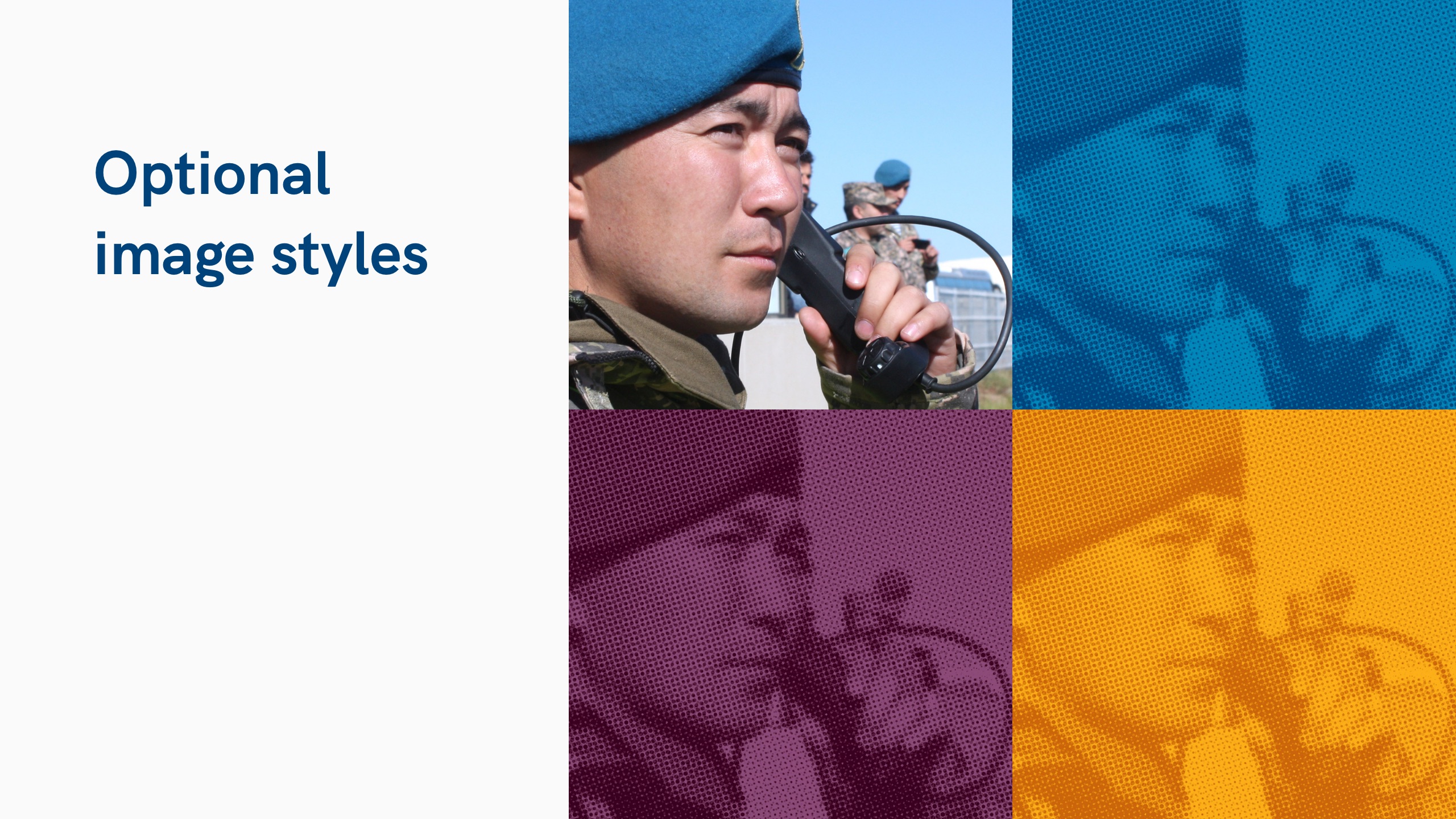
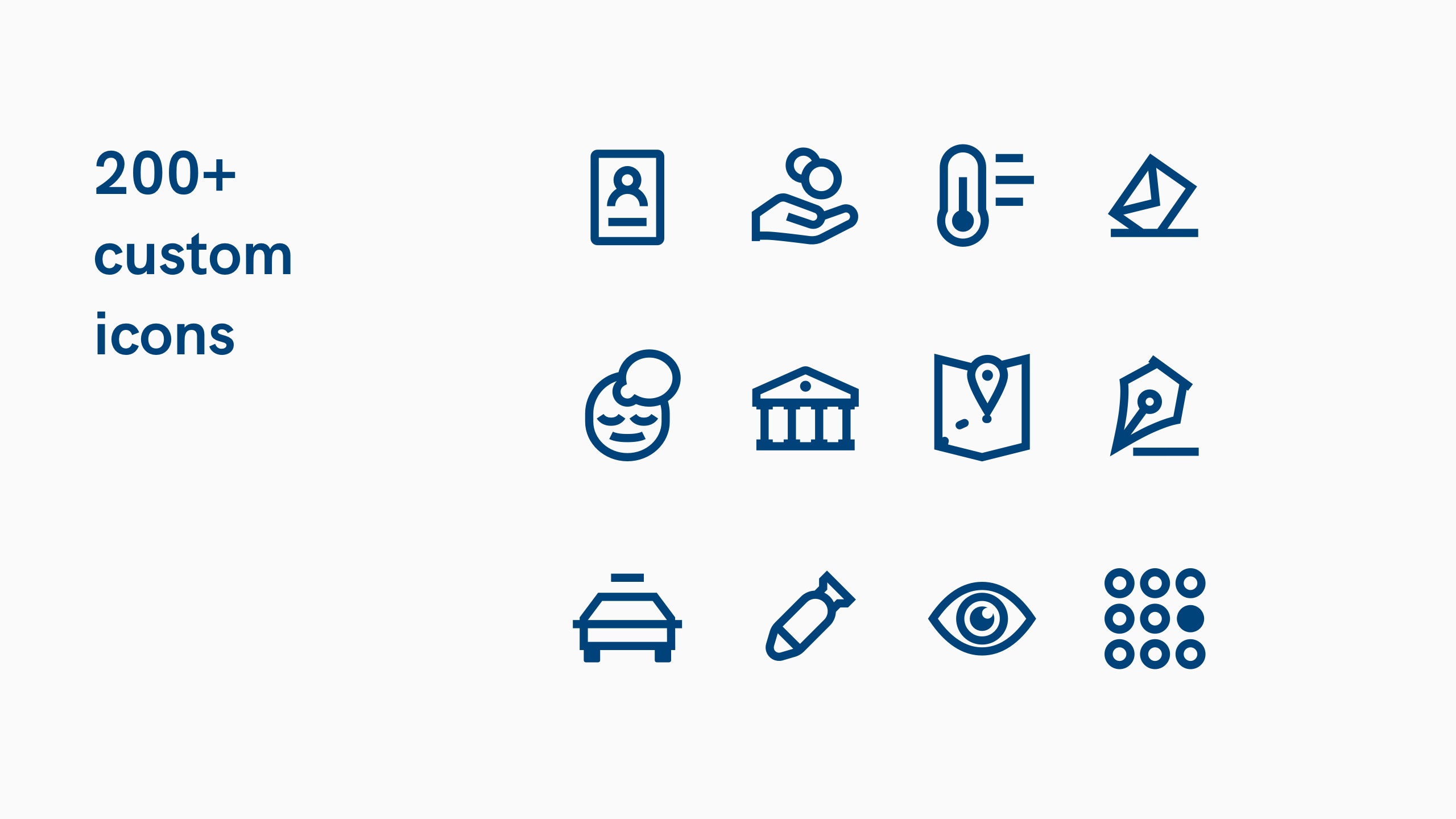
Visual design was guided by OSCE branding, multilingual requirements and sensitivity in imagery and iconography.
The OSCE is the world’s largest regional security organisation. The website serves as a digital platform supporting 57 participating States and one of the most complex security mandates worldwide.
Team
Client: OSCE
Direction: OSCE Communication and Media Relations Section
Project management: Renaud Cuny, Barbara Köhler, Oliver Köhler
Content editing: Alexander Nitzsche
Development: Oliver Köhler, Dimitar Rupov, Acolono GmbH, Martin Wittmann-Fondi
Stakeholder coordination: Barbara Köhler, Alexander Nitzsche
Information Architecture: Renaud Cuny, Barbara Köhler
Design, prototyping, page-building: Barbara Köhler, Tolgonai Akimova
Training and support: Barbara Köhler, Oliver Köhler, Tolgonai Akimova